_100x71.webp)
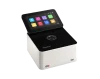
Implen NanoPhotometer® NP80-Mobile UV/Vis with built-in color touch screen and battery pack for mobile applications
16 178.50
–
+
Delivery / installation will take place shortly after order confirmation

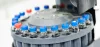
A spectrophotometer is a measuring device that quantifies the absorption or transmission of light by a substance.
The light source generates a spectrum of light that is required for the analysis. A monochromator filters out a specific wavelength. The light is then passed through the sample, which partially absorbs or transmits it depending on its chemical properties. A detector measures the intensity of the transmitted light in order to calculate the absorption.
- Diagnostics: determination of substances such as glucose, cholesterol or nucleic acids.
- Microbiology: Cell growth measurement (optical density) and virus quantification.
- Research: Analysing enzyme reactions, biomolecule purity and metabolic pathways.
- Pharmacology: drug analyses and release studies.
- Environmental and water analysis: Detection of pollutants and chemical compounds.
_100x71.webp)
_100x71.webp)
_100x71.webp)
_100x71.webp)
_100x71.webp)
_100x71.webp)
_100x71.webp)
_100x71.webp)
_100x71.webp)